

In the last two years the United States has experienced two epoch making political events.
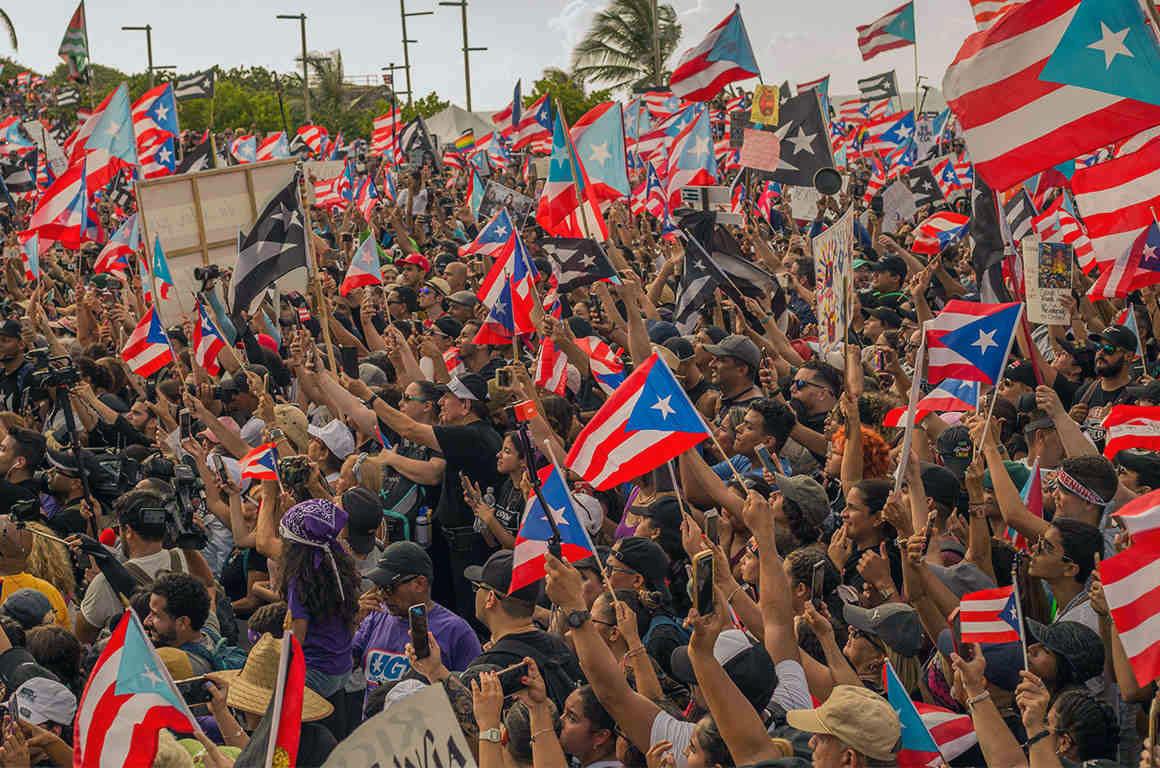
In the summer of 2019 hundreds of thousands of U.S. citizens peacefully rose up to challenge a corrupt and incompetent governor. Puerto Rico’s Governor Ricardo Rossello resisted but could not quell the incessant public outrage and was forced to resign. He is the first elected governor in Puerto Rico’s history to do so.
In the winter of 2021 thousands of enraged U.S. citizens militantly protested the results of a legitimate presidential election. Hundreds of these aggrieved protestors stormed the poorly protected U.S. Capitol where Congress was in the process of certifying the electoral college vote. But Congress did not abdicate its constitutional task in the face of the terrorist attack. The assault by self- professed patriots on the Capitol, the iconic symbol of American democracy, was the first in U.S. history.
Paradoxically, the protestors in Puerto Rico and the rioters in the nation’s Capital had similar goals. Both wanted to disrupt the government and effect a change in its leadership. In Puerto Rico people rose to depose a discredited governor and demanded greater government transparency and accountability. In the U.S. protestors launched an insurrection to preserve Donald Trump’s reign and to demolish key tenets of the constitution that enshrined the peaceful transfer of power.
But the popular uprising in the colonial archipelago and the insurrection in the seat of the American empire are categorically different. In the Senate Chamber, a somber Mitch McConnell proclaimed that the domestic terrorists were “provoked by the president and other powerful people.” There is little doubt the riotous protest was coordinated. It was not spontaneous, and took time in the making. Months before the election, the Republicans and right-wing media synchronized an incessant stream of outrageous lies to arouse the passions and insecurities of aggrieved white supremacists loyal to Trump. This was not a people’s uprising. It was the act of an excitable mob incited by a vainglorious and morally corrupt autocratic wannabe.
Puerto Rico’s peaceful uprising mobilized hundreds of thousands. The movement arose organically and continued to gain momentum with every revelation of government ineptitude and malfeasance. It was led by autonomous self-help organizations built by anguished survivors in the aftermath of the devastation and massive loss of life wrought by Hurricane Maria in 2017. The elected leadership had failed the people. The mobilized population refused to wait until the next election to remove the incompetent and pitiless government officials. The removal of the governor and resignation of his staff were a matter of life and death.
The events of January 6 were quickly disavowed as incongruous with America’s past. In a moment of historical amnesia regarding the violent underpinnings of the birth and preservation of the American republic, President Biden pronounced that, “This is not who we are.”
Commentors in the U.S., hoping to reassure a nervous population and an incredulous world, alluded to the insurrection as an act more befitting a “third world country” than America, the world’s citadel of democracy.
It is ironic that Puerto Rico, which would peacefully weather a potentially destabilizing constitutional crisis, was portrayed in the aftermath of Hurricane María by the Trump administration and its enablers at Fox News as a third world country. Puerto Rico evokes in the American mindset a tropical island whose population is vaguely alien and despite their U.S. citizenship are not truly American. This attitude was in full display when right wing political agitator Tucker Carlson, who Representative Alexandria Ocasio-Cortez called out as a “white supremacist sympathizer,” interviewed governor Rossello. Carlson, feigning bemusement, wanted to know, “Why would America want to absorb a third world country into the United States” … “it is totally corrupt and dysfunctional.” Trump administration officials often referred to Puerto Rico as “that country”. For months Trump lambasted Puerto Rico as “a place” run by corrupt politicians who “take from the U.S.A.” Trump bemoaned that hurricane relief payments to Puerto Rico would hurt “our Farmers and States.” After one of his officials compared Ukraine’s corrupt government to Puerto Rico, Representative Nydia Velazquez denounced Trump for his “deep antipathy to our fellow citizens in Puerto Rico, ” which he views “as a foreign country.”
The outdated and derogatory phase “third world” has been retooled into a racialized concept to encompass politically volatile, economically devastated countries inhabited by morally deficient, frenzied black and brown people. Trump’s vulgar references to Haiti, El Salvador and African nations as “shithole countries” captures the racial recasting of the global south.
So, saying that the storming of the Capitol by a motley swarm of white supremacists is reminiscent of the antics in turbulent “third world countries” is wrong. The attack on the Capitol was a last-ditch act of desperation to thwart the installation of a president who owed his victory to a multiracial coalition. The rioters were terrified that a Biden administration would throttle the ascendency of white supremacy, which was the lifeblood of the Trump regime.
It makes more sense to compare the January 6 riot to events from U.S. history itself: white mobs committing mass murder of African Americans in St. Louis (1917), the Red Summer (1919) Tulsa (1921), and Rosewood (1923). And let’s not overlook the state-sanctioned massacre of Native Americans at Wounded Knee (1890), and Puerto Rican nationalists at Ponce (1937).
The ugly truth is that “this is also who we are.”

