

Ante la crítica situación que atraviesa Puerto Rico tras el paso del Huracán María, académicas y académicos de la diáspora puertorriqueña, con el liderato de Áurea María Sotomayor y la colaboración de Juan Carlos Rodríguez, Sheila Vélez, y Luis Othoniel Rosa, entre otros, han redactado esta Declaración por Puerto Rico (traducida al inglés por María de Lourdes Dávila, Nemir Matos Cintrón, Adriana Garriga López, Myrna García Calderón y César Salgado). Esta declaración ya ha sido suscrita por las más de 200 personas abajo firmantes.

DELCARACIÓN POR PUERTO RICO
[dropcap]L[/dropcap]a destrucción causada por el Huracán María ha develado aún más la condición colonial de Puerto Rico, donde millones de personas se enfrentan hoy a una lucha entre la vida y la muerte. La crisis financiera creada por la banca norteamericana y leyes coloniales tales como PROMESA y el Acta Jones (Leyes de Cabotaje de 1920) son mecanismos legales que impiden dicha recuperación, poniendo en tela de juicio el valor mismo de la ciudadanía americana en la isla. La urgencia de la situación requiere una respuesta política.El estado de hecho
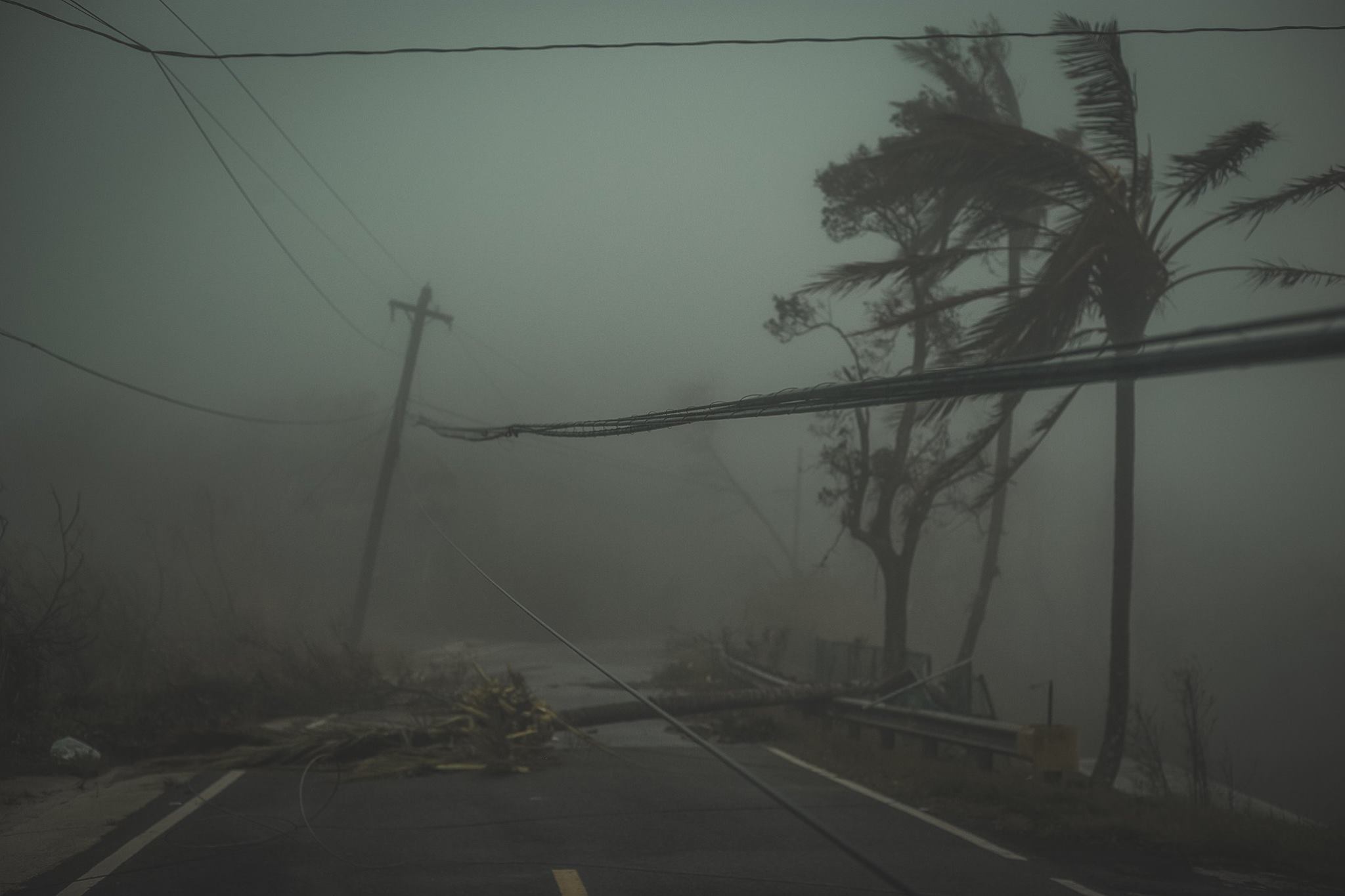
Puerto Rico está atravesando una crisis humanitaria como consecuencia del huracán María, que asoló la isla el miércoles, 20 de septiembre, como un huracán de categoría cuatro. Inmediatamente, por razones de seguridad, el gobernador declaró un toque de queda de siete de la tarde a seis de la mañana, que continúa vigente indefinidamente (al momento de publicar esta Declaración el horario del toque de queda se había enmendado de nueve de la noche a cinco de la mañana). Siete días después del evento, todavía cientos de comunidades se hallan aisladas e inundadas, carentes de alimentos y agua potable por razón de la destrucción de las autopistas y carreteras, sumiendo en la incomunicación a pueblos, barriadas y ciudades. Tampoco se han restablecido los servicios de telefonía, internet, agua potable ni electricidad en la mayor parte del país. El radar meteorológico está destruido, así también como las torres de vigilancia del aeropuerto internacional. Existe una crisis de salubridad pública, dadas las condiciones precarias en los hospitales y la inminencia de epidemias a causa de la contaminación de las aguas. Ciudades, pueblos y barriadas fuera del área metropolitana han sido abandonados y los esfuerzos se concentran en San Juan. El área oeste, por ejemplo, carece de los servicios mínimos. Las imágenes compartidas por los medios de prensa muestran a periodistas y meteorólogos conmovidos con el drama humano ocasionado por el desastre. Lo que aún no se discute en dichos reportajes es un plan coherente de acción a corto y largo plazo para mover al país hacia adelante, especialmente respecto a lo que más urge. Tampoco parece existir un plan de mitigación y no se aducen las razones de la falta de circulación de provisiones y ropa. Se desconoce hacia dónde se dirige el país. Inmersos en el espacio de la precariedad, la fuerza se concentra en la sobrevivencia y aún no es visible un análisis sensato de naturaleza política de la experiencia que se vive al presente. Muchos ya han decidido abandonar el país, como se demostró el primer día en que se abrió el aeropuerto internacional. Es una imagen cruel en donde contemplamos cómo la urgencia de la situación y la ausencia de un plan de acción inmediata vacían al país. El peor resultado sería el silenciamiento de cualquier voz disidente. Las medidas de emergencia han creado un estado de excepción, útil para impulsar normas de austeridad que en nada benefician a Puerto Rico, un país ya devastado por el desastre financiero de una deuda impagable.
Las islas que conforman la cuenca del Caribe han sufrido los embates de dos fuerzas huracanadas mayores en el mes de septiembre: Irma y María. Las islas de Cuba, República Dominicana, Dominica, Barbuda, las Islas Vírgenes, Antigua, Guadalupe, St. Kitts y Puerto Rico son estados política y geográficamente precarios, por razón de su condición de isla y por su condición política colonial. “Provincias de ultramar” se las llamaba, por razón de su dependencia política con respecto a un territorio metropolitano. El mundo ha contemplado en estos días recientes lo que la historia ya ha hecho evidente ante nuestros ojos: nuestras fronteras marítimas y aéreas son controladas por agencias norteamericanas. Puerto Rico es una colonia de los Estados Unidos, cuyo vínculo político emana de una invasión después de la cual se impuso la ciudadanía norteamericana, y una secuela de leyes que solo sirven para consolidar el vínculo servil y lastrar la posibilidad de la soberanía y la emancipación. La ciudadanía norteamericana tuvo como secuela inmediata el reclutamiento de puertorriqueños en el servicio militar obligatorio durante las guerras mundiales, así como la Ley Jones sirve para controlar y duplicar el costo de los bienes materiales que llegan a puerto, pues solo barcos norteamericanos están legitimados comercialmente. La reciente ley PROMESA (un acrónimo cínico e injuriante que designa las siglas de una junta de acreedores) y que le impone a Puerto Rico y sus habitantes el pago de millones de dólares y medidas extremas de austeridad ni siquiera se ha auditado. PROMESA se ha convertido en un cuerpo supra gubernamental con control absoluto sobre las finanzas, las leyes y los reglamentos vigentes en Puerto Rico. PROMESA es el acto congresional más oneroso que ratifica la autoridad colonial sobre Puerto Rico y constituye una expresa violación de los principios de la democracia, el republicanismo y la soberanía popular. En ello estriba la necesidad de derogar PROMESA y la Ley Jones, pues en su convergencia jurídica coagula el dominio del poder colonial con el propósito de conservar y avanzar los intereses económico-políticos de la metrópolis. En este momento, cuando prevalece una crisis humanitaria en Puerto Rico, no existe un ápice de interés que mueva a Washington a derogar permanentemente ambas leyes a fin de que redunde a favor de los intereses del pueblo puertorriqueño en estos tiempos aciagos.
La ciudadanía norteamericana, en estas circunstancias, no es un privilegio, sino un carimbo impuesto al esclavo para marcarlo, de forma que rinda con su cuerpo un débito extraño bajo las circunstancias más acuciantes. Se trata de una ciudadanía precaria, sujeta a los límites que el Congreso precisa, sin ninguna interpelación del sujeto a quien se le impone. En estas circunstancias, ser una colonia norteamericana y ser ciudadanos de los EEUU no concede ninguno de los derechos obtenidos por zonas impactadas por los mismos sucesos en territorios norteamericanos. Todo lo contrario. Más bien, la ciudadanía nos convierte en rehenes, en entes prescindibles y en víctimas de una caridad calculada. Es necesario abolir el Acta Jones, que impone restricciones de ingreso de otros buques a la isla, siquiera para tender una mano solidaria. Es necesario abolir la Ley Promesa, pues Puerto Rico no puede reconstruirse sobre la base de una deuda impagable y fraudulenta. Ambas leyes condenan al país a un futuro económico insostenible que intensificará el éxodo de los puertorriqueños fuera de su isla.
La “ayuda” controlada hasta este momento por los Estados Unidos a través de FEMA transforma las coordenadas de interpretación de este evento. En primer lugar, porque somete a los habitantes de un territorio en crisis a lo que pueda realizar una agencia federal, excluyendo la ayuda que pueda provenir de otros países en este momento crítico. Más allá del paternalismo que ello implica, convierte a los puertorriqueños en rehenes de su condición colonial. Al explotarse el momento de precariedad física por la que pasan, promueve el que devenga servilismo psicológico. Hay que preocuparse por la imagen del puertorriqueño que puede crearse a partir de esta emergencia, ahora que más frágil y precarias son las condiciones, mientras incrementan y se tornan más visibles los uniformes. Se propicia el chantaje sentimental, se demora el esfuerzo ante una población que el gobierno federal considera prescindible y se confirma la indiferencia con el cercenamiento de la solidaridad con otros pueblos hermanos al impedirse que fluya otro tipo de ayuda. Se reduce al puertorriqueño al “amparo” de un país, se bloquean otras ayudas humanitarias, se le coloca al borde de la desaparición arriesgando la vida de miles que aún se hallan incomunicados. Se desconoce el fin último de este toldo de ayuda federal. La creciente militarización de dicha ayuda humanitaria en un momento en que los puertorriqueños están absolutamente incomunicados y desprovistos no anuncian un futuro claro. Torna la inminente transformación de este estado de emergencia en una oportunidad para medrar económicamente, mientras cientos de personas mueren por falta de agua, alimentos y tratamiento médico. Ninguna razón política o económica justifica la muerte de pacientes de diabetes que no poseen los medios para enfriar sus dosis de insulina ni la de pacientes de diálisis que han visto sus tratamientos interrumpidos por falta de electricidad. Las consecuencias de este bloqueo a la solidaridad podrían ser mayores que las víctimas producidas por el huracán mismo. En medio de una crisis humanitaria, el Presidente insiste en ratificar y exigir el cumplimiento del pago de la deuda crediticia. Ante su posición, es necesario acudir a otros medios. Es preciso abolir la Ley Promesa. No es hora de invocar los falsos derechos inherentes a una ciudadanía de segundo grado, sino clamar por el derecho de todo ser humano a la vida.
Ante esta situación de hechos, exigimos:
- el reconocimiento de un estado de crisis humanitaria.
- la derogación inmediata del Acta Jones (Ley de la Marina Mercante de 1920) para Puerto Rico y de la Ley PROMESA.
- no condicionar la ayuda provista por las agencias federales.
- la apertura de los puertos a todos los que deseen solidarizarse con el pueblo puertorriqueño.
- el restablecimiento de todos los medios de comunicación por tierra de toda la isla.
- fondos y asistencia para los miles de personas sin casa, agua, alimentos y servicios de electricidad.
STATEMENT FOR PUERTO RICO
The destruction brought by Hurricane Maria has exposed the profound colonial condition of Puerto Rico, as millions of human beings are faced with a life or death situation. The financial crisis manufactured by American bankers, colonial laws such as PROMESA and the Jones Act that controls maritime space, are legal mechanisms that prevent Puerto Rico’s recovery, and even call into question the validity of American citizenship on that island. Given the severity of the situation, political action is necessary.
The State of Facts
Puerto Rico is experiencing a humanitarian crisis as a result of Hurricane Maria, which struck the island on Wednesday, September 20, as a Category Four hurricane. Immediately thereafter, Governor Roselló declared a curfew from dawn to dusk for security reasons. Six days after the event, hundreds of communities are still flooded, isolated without any food or drinking water, as highways and roads are blocked or destroyed, making communication between towns, neighborhoods and cities impossible. Telephone, internet, drinking water and electricity services have not been re-established in most communities. The weather radar was destroyed as well as the surveillance towers at the San Juan International Airport. There is a public health crisis due to the precarious conditions in hospitals and the threat of epidemics stemming from contaminated water. Cities, towns and neighborhoods outside the metropolitan area have been abandoned, and efforts are concentrated in the San Juan metro area. The western part of the island, for example, lacks minimum services. The images shared with the world by visibly shaken journalists, television anchors, and meteorologists speak of the human drama caused by the disaster. What is missing from many of those reports is concrete information of plans and immediate, achievable initiatives to move the country ahead, as well as an ongoing plan. Explanations are necessary for why so many efforts to reach, house, feed and clothe many Puerto Ricans are unsuccessful. The people and the local government need the freedom to make and act on decisions quickly. There is no sensible political analysis of the situation due to such dire absence of communication. The state of precariousness in which the entire population of the island finds itself forces individuals to concentrate all of their strength on survival. Many have already opted to leave the country as the re-opening of the Luis Muñoz Marín airport demonstrated in its first day of service after the hurricane. It is a cruel way of emptying Puerto Rico of its most valuable resource, its people; the potential silencing of any dissident voices in the process is unacceptable. This state of emergency could be used to promote new measures of austerity that will not benefit Puerto Rico, a country already devastated by the financial disaster of an unpayable debt.
The Caribbean has been pummeled by two major hurricanes in the month of September: Irma and Maria. The Virgin Islands, Cuba, the Dominican Republic, Dominica, Barbuda, Antigua, Guadeloupe, St. Kitts, and Puerto Rico are geopolitically precarious: physically as islands and politically for their colonial history and status. They were traditionally called “Overseas Provinces” because of their political and economic dependence on a metropolitan mainland. The world has found out in the past few days what our history has always stubbornly made visible to us. Puerto Rico is a colony of the United States. Its political status stems from the U.S. invasion of 1898 and a series of laws that served only to consolidate U.S. control, hindering the possibility of Puerto Rican sovereignty and political emancipation. One such law is the Merchant Marine Act of 1920, or Jones Act, which determines that Puerto Rico’s maritime waters and ports are controlled by U.S. agencies. The limits on shipping imposed by the Jones Act double the cost of consumer goods arriving at our shores, since they curtail the ability of non-U.S. ships and crews to engage in commercial trade with Puerto Rico. The recent legislation, PROMESA (or “promise,” a cynical and injurious acronym for the Puerto Rico Oversight, Management, and Economic Stability Act), which imposes millions of dollars of accrued debt and stringent austerity measures on Puerto Rico and its inhabitants, is yet to be audited. PROMESA has established a supra governmental body with complete control over finances and the laws and regulations adopted by the PR government. PROMESA represents Congress’ most significant overt act to restate its colonial authority over Puerto Rico in total disregard of democracy, republicanism, and popular sovereignty. Here is where the need to repeal PROMESA and the Jones Act intersect, as both are exercises of colonial power to further the economic and political interest of the metropolis. At this time of humanitarian crisis and dire times for Puerto Rico Washington will not act in the best interest of the people of Puerto Rico by repealing both PROMESA and the Jones Act.
The US citizenship of Puerto Ricans, in this circumstance, is not a privilege, but the branding of a slave. It is a restrictive citizenship subject to the limits imposed by the US Congress without any interpellation of the subject to whom it is imposed. As an American colony, citizenship in this case actually denies Puerto Ricans any of the rights obtained by other regions impacted by the same events in the North American mainland. Citizenship makes us hostages, dispensable entities and victims of calculated charity. It is necessary to repeal the Jones Act, which imposes restrictions on the entry of other vessels to the island, even if their intention is only to offer humanitarian aid. It is necessary to abolish the PROMESA Law, since Puerto Rico cannot be rebuilt on the basis of an unpayable and fraudulent debt. Both laws condemn the country to an unsustainable economic future that will intensify the exodus of Puerto Ricans from their island.
The manner in which aid delivered to Puerto Rico has been confiscated and controlled by FEMA, along with the refusal to assist Puerto Rico in a manner similar to that offered to mainland localities affected by Hurricane Irma, for example, shapes our interpretation of this event. It subjects the inhabitants of a territory in crisis to the limits of what a federal agency is willing to do, and denies aid that may come from other countries at this critical time. Beyond the paternalism that this implies, it turns Puerto Ricans into hostages of their colonial condition. While exploiting the physical deprivation Puerto Ricans are experiencing, FEMA’s presence also promotes psychological servility. As military uniforms increase and become more visible due to this emergency, a very troubling image is emerging of the Puerto Rican people, under increasingly fragile and precarious conditions. Efforts are delayed for a population that the federal government considers expendable. Rampant indifference is affirmed with lack of solidarity with neighboring towns by preventing other kinds of aid from flowing into and through the island. This situation brings Puerto Ricans down to their knees, at the mercy of the equivocal aid provided by the US, while other humanitarian aid is blocked. Puerto Ricans are placed under peril, endangering the lives of thousands that still have not been reached. The ultimate goal of this federal aid is unknown. Its growing militarization at a time when Puerto Ricans are deprived of the basic means of survival and communication is alarming. It turns this state of emergency into an opportunity for some to thrive financially while hundreds of people die from lack of water, food and medical treatment. No political or economic reason justifies the death of diabetes patients who do not have the means to keep their insulin cool nor dialysis patients who have seen their treatments interrupted due to lack of electricity. The consequences of this blockade on solidarity could be greater than the victims produced by the hurricane itself. The recent statements by President Trump are unworthy of any president. In the midst of a humanitarian crisis, he demands payment of the credit debt. Immediate actions must be taken. The PROMESA law and the Jones Act must be repealed. This is not the time to invoke the false rights inherent in second-degree citizenship, but to claim the right of every human being to life.
Faced with these facts, we demand
- The recognition of a state of humanitarian crisis.
- The immediate repeal of the Jones Act (Merchant Marine Act of 1920) for Puerto Rico and the repeal of the PROMESA Law.
- That the aid provided by the federal agencies not be subjected by any conditions that can delay or limit its reach.
- The opening of the ports to all those who wish to show solidarity with the Puerto Rican people.
- The reestablishment of all means of communication across the island.
- Dedicated funds and assistance for the thousands of people without home, water, food, and electricity.
Firmantes/Signatures:
[one_half]Áurea María Sotomayor Miletti, University of Pittsburgh
Juan Carlos Rodríguez, Georgia Tech University
Rubén Ríos, New York University
María de Lourdes Dávila, New York University
Julio Ramos, University of California, Berkeley
Luis Othoniel Rosa, University of Nebraska
Nemir Matos Cintrón, Ana G. Mendez, Florida
Arnaldo Cruz Malavé, Fordham University
Sheila I. Vélez Martínez. University of Pittsburgh
Adriana Garriga López, Kalamazoo College
César A. Salgado, University of Texas, Austin
Jossianna Arroyo, University of Texas, Austin
Miguel Rodríguez Casellas, University of Technology, Sydney
Lena Burgos Lafuente, Stony Brook University
Kahlil Chaar-Pérez, Editor and independent translator
Myrna García Calderón, Syracuse University
Licia Fiol-Matta, New York University
Juan Carlos Quintero-Herencia, University of Maryland
Dafne A. Duchesne Sotomayor, Rutgers University. New Brunswick
René A. Duchesne Sotomayor, Junior Architect, Pittsburgh
Margarita Pintado Burgos, Ouachita, Baptist University
Kelvin Durán Berríos, University of Pittsburgh
Edgard Luis Colón Meléndez, University of Pittsburgh
Gustavo Quintero, University of Pittsburgh
Urayoán Noel, New York University
Jaime Rodríguez Matos, California State University, Fresno
María Dolores Morillo López, California State University, Fresno
Ivette Romero, Marist College
Rocío Zambrana, University of Oregon
César Colón Montijo, Columbia University
Ivette N. Hernández-Torres, University of California at Irvine
Yolanda Martínez-San Miguel, University of Miami /Rutgers University
Wanda Rivera-Rivera, Bearley School, New York
James Cohen, Université Paris 3, Sorbonne Nouvelle
Nayda COllazo Lloréns, Kalamazoo College, Michigan
Cristina Moreiras-Menor, University of Michigan
Odette Casamayor, University of Connecticut, Storrs.
José Quiroga, Emory University
Cristel Jusino Díaz, New York University
Lawrence La Fountain-Stokes, University of Michigan
Eliseo Colón Zayas, University of Puerto Rico
Nelson Maldonado-Torres, Rutgers University, New Brunswick
Pamela Voekel, Dartmouth College
Diana Taylor, New York University
Alejandra Olarte, Universidad de La Salle, Bogotá
Jasón Cortés, Rutgers University, Newark
Yara Liceaga, Writer. Cultural Activist
Diana Guemarez Cruz, Montclair University
Luis F. Avilés, University of California, Irvine
Ramón López, Hunter College
Carina del Valle Schorske, Columbia University
Pablo Delano, Trinity College
Arlene Dávila, New York University
Néstor E. Rodríguez, University of Toronto
Efraín Barradas, University of Florida, Gainsville
Raquel Salas Rivera, University of Pennsylvania
Ronald Mendoza de Jesús, University of California
Iván Chaar-López, University of Michigan
María R. Scharrón-del Río, Brooklyn College, CUNY
Miguel Luciano
Monxo López, Hunter University
Guillermo Irizarry, University of Connecticut
Myrna García-Calderón, Syracuse University
Jara Rios
Cecilia Enjuto Rangel, University of Oregon
Ricardo Monge
Marina Reyes Franco
Carla Acevedo-Yates
Talía Guzmán González
William García
Yasmin Ramirez
Ivette Román-Roberto
Moisés Agosto
Judith Sierra-Rivera
Yomaira Figueroa
Joshua Ortiz Baco
Nilvea Malavet
Ronald Mendoza-de Jesús
Iván Chaar-López. University of Michigan
Manuel G. Avilés-Santiago, Arizona State University
Ángel Rivera, Worcester Polytechnic Institute
Claudia Sofía Garriga-López
Mónica Alexandra Jiménez, University of Texas, Austin
Mario Mercado Díaz
Sergio Gutiérrez Negrón
Vanessa Pérez-Rosario
Nicole Delgado
Reynaldo Padilla, University of Puerto Rico
Mónica E.Lugo-Vélez, University of Illinois, Urbana-Champaign
Luis J. Cintrón-Gutiérrez, University at Albany/SUNY
Jorell A. Meléndez-Badillo, University of Connecticut, Storrs
Jonathan Montalvo, Graceland University
Sandra Casanova, Binghamton University
Diana Guemárez-Cruz, profesora jubilada, Montclair State University NJ
María del Mar González, Independent Scholar
Alai Reyes Santos, University of Oregon
Nayda Collazo-Lloréns, Kalamazoo College
Aurora Santiago-Ortiz, J.D. University of Massachusetts
Isa Rodríguez-Soto, University of Akron
Marcela Guerrero, Whitney Museum of American Art
Vanessa Arce Senati, University of Buffalo
José G. Luiggi-Hernández, Duquesne University
Moisés Agosto-Rosario, Director of Treatment NIMAC, Washington DC
Cecilia Enjuto Rangel, University of Oregon
Patricia Villalobos Echeverría, Western Michigan University
Christina A. León, Princeton University
Frances Aparicio, Northwestern University
Beliza Torres Narváez, Augsburg University
[/one_half] [one_half_last]Judith Sierra-Rivera, The Pennsylvania State University
Joshua G. Ortiz Baco, The University of Texas, Austin
Lcdo. Gabriel E. Laborde Torres, Goldstein & Associates
Jorge Irizarry Vizcarrondo, J. D.
Nicole Cecilia Delgado, La impresora
Cristina Pérez Jiménez, Manhattan College
Yara Liceaga-Rojas, escritora, gestora cultural
Santa Arias, University of Kansas
Daniel Nevarez, University of Massachusetts, Amherst
Sally A. Everson, University of the Bahamas
Aurora Santiago-Ortiz, J.D. University of Massachusetts
Valeria Grinberg Pla, Bowling Green State University
Joseph A. Torres-González, City University of New York
Marco A. Martínez Penn State University
Jessica Mulligan, Providence College
José Martínez-Reyes, UMass Boston
Halbert Barton, Associate Professor of Anthropology, Long Island University
José R. Irizarry, Villanova University
Jorell A. Meléndez-Badillo, University of Connecticut, Storrs.
Ronald Mendoza de Jesús, University of Southern California
Isatis M. Cintrón, Rutgers University
Karrieann Soto Vega, Syracuse University
José R. Días-Garayúa, California State University Stanislaus
Marisol LeBrón, Assistant Professor of American Studies, Dickinson College
Giovanna Guerrero-Median, Yale Ciencia Initiative, Executive Director, Ciencia Puerto Rico
Agustín Laó-Montes, University of Massachusetts at Amherst
Luis J. Beltran Álvarez, University of Connecticut, Storrs
Shariana Ferrer-Núñez, Purdue University
Catalina de Onís. Willamette University
Selma Feliciano-Arroyo, University of Pennsylvania
Luis Aponte
Miguel Cruz
Emma Amador, Brown University
Frances Negrón-Muntaner, Columbia University
Frances Aparicio
Liza Goldman Huertas, MD, West Haven, CT
José Quiroga, Emory University
Carlos Gardeazábal Bravo, University of Connecticut
Alexa S. Dietrich, Wagner College
Maritza Stanchich, Universidad de Puerto Rico, Río Piedras
Don E. Walicek, Universidad de Puerto Rico, Río Piedras
Yadira Pérez Hazel, University of Melbourne
Salvador Vidal-Ortiz, American University
Carlos E. Rodríguez-Díaz, Universidad de Puerto Rico-Recinto de Ciencias Médicas
Stephanie Mercado Irizarry, El Instituto, University of Connecticut, Storrs
Libertad Guerra, Director of the Loisaida Cultural Center
Alfredo Villanueva-Collado, CUNY
Joaquín Villanueva, Gustavus Adolphus College
Laura Briggs, University of Massachusetts
Maximilian Alvarez, University of Michigan
Ivonne del Valle, University of California, Berkeley
Francisco Cabanillas, Bowling Green State University
Jason Ortiz, Hartford CT, President CT Puerto Rican Agenda
Carlos Amador Michigan Technological University
Karen Graubart, History, University of Notre Dame
Raul Santiago Bartolomei, Urban Planning
Sol Price, School of Public Policy, University of Southern California
Oscar Ariel Cabezas UMCE, Santiago de Chile
Féliz Padilla Carbonell, University of Connecticut
Juan Sánchez, Hunter College, CUNY
Laura Marina Boria González, The University of Texas at Austin
Daniel Torres Rodríguez, Ohio University
Anne Garland Mahler, University of Virginia
Vanessa Pérez-Rosario, Brooklyn College/CUNY
Raul Santiago Bartolomei, University of Southern California
Jean Carlos Rosario Mercado. City University of New York (CUNY)
Carlos J. Carrión Acevedo, Universidad de Puerto Rico y Facultat Universidad de Barcelona
Ryan Mann-Hamilton, CUNY Laguardia
Bianca Premo, History
José R. Díaz-Garayúa, California State University, Stanislaus
Juana Goergen, De Paul University
Pepón Osorio, Temple University, Philadelphia, Pa
Ingrid Robyn, University of Nebraska-Lincoln
Carlos Fonseca, Research Fellow, Cambridge University
Jacqueline Loss, University of Connecticut
Pamela Cappas-Toro, Stetson University
Michelle Osuna-Díaz. KIPP Austin
Kristina Medina- St. Olaf College
Jennifer S. Hughes, University of California, Riverside
Jorge Matos- Valdejulli, Hostos Community College- CUNY
Mariana Cecilia Velázquez, Columbia University
Carmen Rabell, Universidad de Puerto Rico
Pedro López Adorno, Hunter College
Luis J. Cintrón Gutiérrez, University at Albany, SUNY
Idania Miletti, Orlando, Florida
Javier Román Nieves, Yale School of Forestry
Kaliris Y. Salas Ramírez, CUNY School of Medicine
María M. Carrión, Emory University
Stephanie Mercado, University of Connecticut
Arturo Arias. University of California, Merced
Cristián Gómez Olivares, Case Western University, Ohio
John Beverley, University of Pittsburgh
Ana Dopico, New York University
Irizelma Robles, Universidad de Puerto Rico
Mónica Barrientos Olivares, Universidad de Chile
Roger Santibañez, Temple University
Eddie S. Ortiz, Bike Courier
Ivette Román Roberto,
Malena Rodríguez Castro, Universidad de Puerto Rico, Río Piedras
Sally Everson, University of The Bahamas
Jorell Meléndez Badillo, University of Connecticut
Elizabeth Monasterios, University of Pittsburgh
Daniel Balderston, University of Pittsburgh
Tania Pérez Cano, University of Massachussets, Dartmouth
[/one_half_last]


